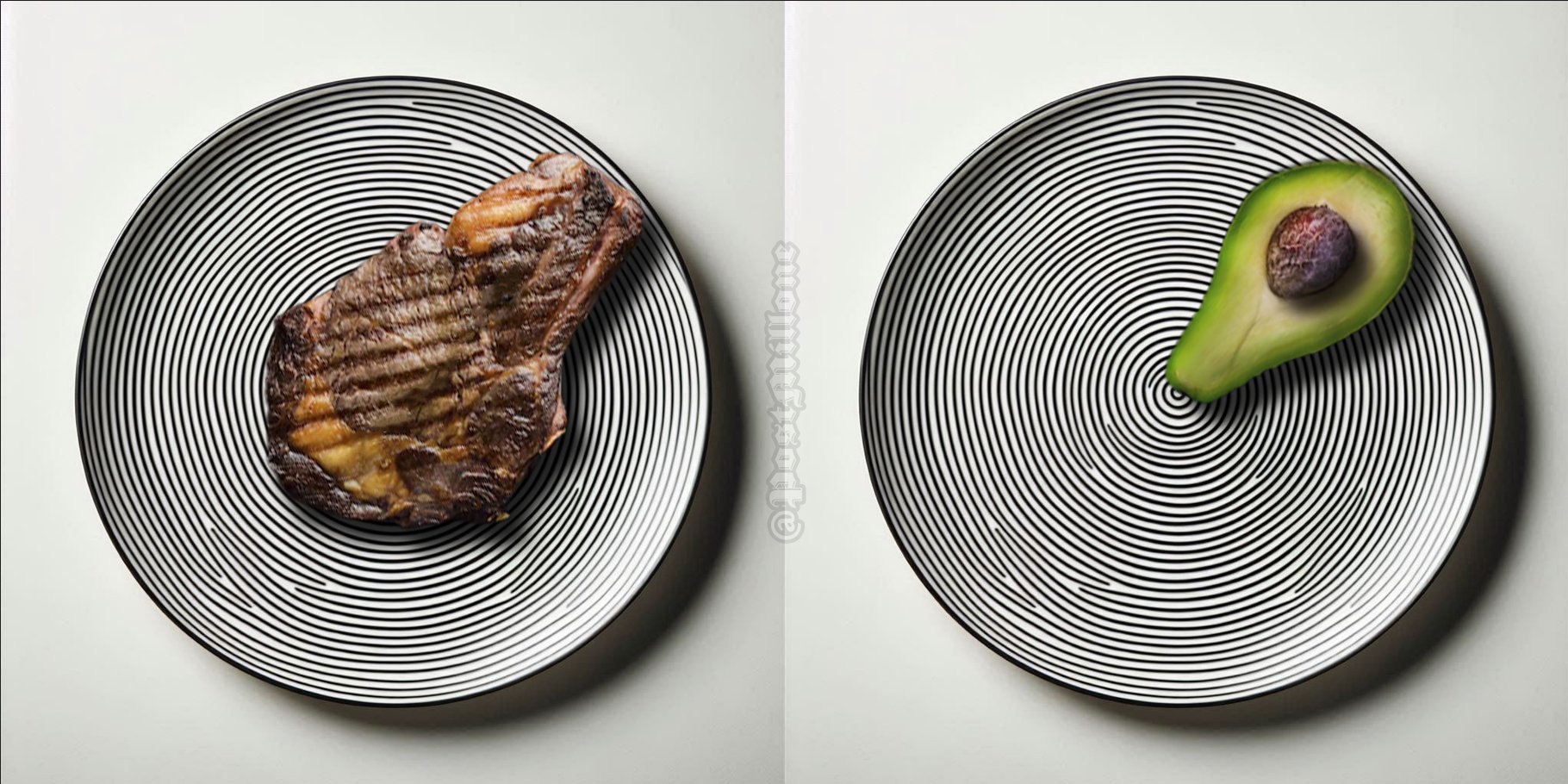
You may have seen this meme:
Which came from this graphic of the "moral circle":
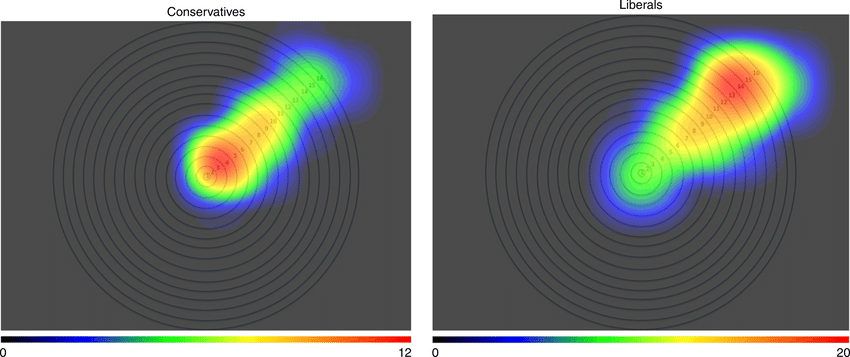
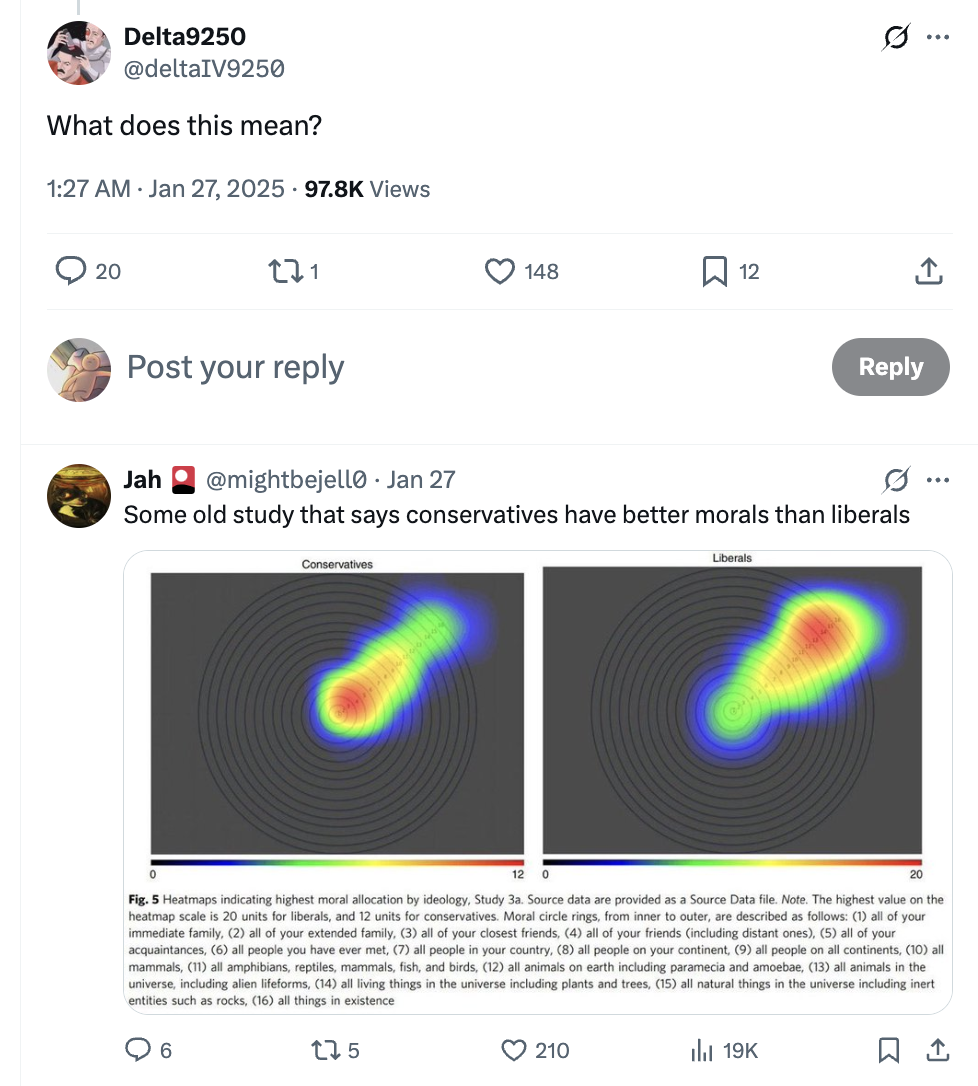
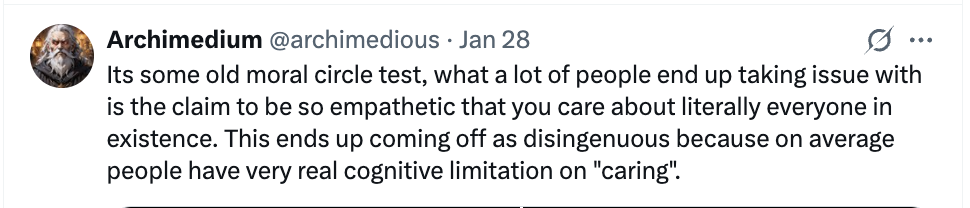
The idea behind the meme is that liberals tend to care about broader issues, while ignoring the one's close to them. While conservatives tend to care about issues close to them while ignoring the broader ones.1
The perfect example of this is given in the first paragraph of Ideological differences in the expanse of the moral circle, the paper that produced this moral circle graphic:
In 2006, then Democratic Senator Barack Obama bemoaned the country's "empathy deficit," telling college graduates, "I hope you choose to broaden, and not contract, your ambit of concern." In 2012, Republican presidential challenger Mitt Romney said, "President Obama promised to begin to slow the rise of the oceans and heal the planet. My promise is to help you and your family."
Many conservatives think that there's something wrong with the liberals and their avocado morality2. They think liberals are masking their personal problems and shortcomings by focusing, impotently, on huge world problems that feel far away from everyday life.
They think the blinking lib, made unnatural by his soy shakes and avocado toast, has lost his natural human morality, which is necessarily tribal. He is more concerned for the biodiversity of Alaskan fire ants than for his own family.
The lib believes he has a big heart. He claims to care about everyone. But this is a ruse. His feelings are weak, impotent, always in flux, and are governed purely by a mental morality that is devoid of will and strength. Truly, he cares about no one.
The conservative, though he seems selfish, is actually the one with real heart. Yes, he might be xenophobic, against welfare, and has a limited scope of concern. But he would die for his family in a heartbeat. Isn't that what true care and true love are about?
The debate reminds me of the Muqqadimah, which is a book by 14th century Islamic scholar Ibn Khaldun about the anthropology of the Middle East. Much of the work is dedicated to contrasting the cultures of nomadic desert tribes (the Bedouin) with city dwellers. Important to this analysis is the idea of asabiyah (ah-sah-BEE-yah), or "group feeling". Asabiyah is tribal camaraderie, courage, vigor, and sacrifice.
Khaldun claims asabiyah is more natural to the Bedouin than the city dweller, because Bedouin survival in the harsh and violent desert depends on group cohesion. Bedouin relations are also largely blood relations, which Khaldun claims creates natural asabiyah. Urban dwellers miss out on this natural asabiyah since many of their social relations are not based in heredity.3
Urban dwellers also live safer, more sedentary, and luxurious lives that make them soft. And this lack of vigor leads to even lower asabiyyah. Khaldun doesn't use the term "soyjak" directly, but the implication is there.4
Similarly, modern conservatives like to point to studies about how increased testosterone levels promotes tribal morality5, implying universalist morality is some kind of disease symptom.
A similar analysis can be found in Nietzsche's On the Genealogy of Morality. There, the "civilized" man has morality imposed on him by a sickly priest class who, feeling threatened by vigor and naturalness in others, try to suppress it with life-denying ethical injunctions (e.g. keep your head down! follow instructions! do not disagree! never assert yourself!). The civilized man does the right thing not because he feels the truth of it in his inner being, but because he wants to be accepted in society as a good, rule-following person. Similarly, a liberal might care about global poverty not because he feels deeply about it, but because he does not want to be judged as a bad person. In contrast, the morality of the "uncivilized" man is instinctual. Unlike the top-down mentalized morality of the city dweller, the uncivilized man gives and sacrifices as a spontaneous act—never because his brain rationally concludes: "this is the right thing to do" (as a utilitarian might).
We find the same idea expressed beautifully in C.S Lewis's Abolition of Man:
In battle it is not syllogisms that will keep the reluctant nerves and muscles to their post in the third hour of the bombardment. The crudest sentimentalism (such as Gaius and Titius would wince at) about a flag or a country or a regiment will be of more use.
The steak-avocado frame can also explain why poor people vote Republican, even though they usually benefit more from Democratic policy. Most politics is identity politics. Many who struggle financially still relate more to the conservative character, which holds more group feeling. This group feeling is activated by nationalism, xenophobia, and lots of rhetoric around the family. The archetype feels like a loyal bulldog.
And this is all quite natural, because of course it is harder for the poor to care about the well-being of Alaskan fire ants or the polar ice caps when their families have immediate and pressing needs. This was what the Obama / Romney example pointed to. Many who are struggling see Republicans as protectors who care about the people closest to them, and so they vote Republican.
Now I'd like to move to the deeper question underneath all of this: is universalism really unnatural? Is it really a symptom of low testosterone?
Of course not. A simple counter example is Martin Luther King, who is neither weak nor decadent. He believed in strength and courage alongside faith and non-violence. And he believed in universal brotherhood as a value that was much stronger than tribalism and nationalism. He transmitted the value of universal brotherhood to us with an immense force in his speech at WMU:
[Through] our scientific genius, we have made of this world a neighborhood. Now through our ethical and moral commitment, we must make of it a brotherhood. We must all learn to live together as brothers or we will perish together as fools. This is the great challenge of the hour. This is true of individuals. It is true of nations. No individual can live alone. No nation can live alone.
The truth of this value is self-evident. Yes, in practice, it can seem fake. People often talk about social justice with little action in order to distract themselves from personal problems. But I do not think that this is grounds to dismiss the value, which is inherently beautiful.
Conservatives, suspicious of the "liberal new world order", point to imperfections in the moral character of the left as a reason to regress to tribalism. We see this happening in America, and all over Europe. But of course the more reasonable thing to do would be to take the best parts of both sides: the passionate group-feeling of the conservative, and the universal affection of the liberal, and to find the intersection between these forces.
The conservative's natural responsibility and strong love of family is an amazing thing that should be preserved. But those who take pride in having "steak morality", who take pride in their exclusionary tribalism, are, I feel, stuck in the 14th century. We cannot cite patriotism as a reason for not caring about issues that go beyond the household.
It is just that, now that our drive to sacrifice is no longer instinctual, we must open our hearts in a more conscious way. We must consciously commit to the ideal of brotherhood, and employ our own forces of will to see everyone as a spiritual being. It is this insight that will kindle our care and respect for depth and dignity of one another.
Esoteric Postscript
Now, if I can get anthroposophical for moment, I believe the idea that "universal brotherhood" is somehow unnatural is a holdover from pre-Enlightenment consciousness.
Here I speak in terms of Rudolf Steiner, and the others who see history as an evolution of human consciousness rather than the dialectic of purely material forces.
The basic view of anthroposophists is this: modern man is fundamentally different than how he was in the 14th century. And fundamentally different in ways far beyond what can be attributed to changes in material conditions, technology, or the structure of society. One of these fundamental differences is the contraction of group feeling and an increase in individualism. We feel now, in an experiential way that is not related to social-material forces, more individual than man used to feel in the Middle Ages. Man in the Middle Ages, in those Bedouin tribes, felt energetically merged with his family and nation. And according to anthroposophist Dr. Robert Gilbert, this merging was not the result of different cultural or material forces, but spiritual forces that were part of the destiny of human evolution. Specifically, he says the human etheric bodies has contracted, so that it is less natural for us merge energetically with those around us.
This individualism is not meant to alienate us, but to create a more individuated inter-connectedness, a "standing alone together", a universal brotherhood of loving individuals, rather than tribal group-souls.
Waytz et al., "Ideological differences in the expanse of the moral circle," Nature Communications, 2019. https://doi.org/10.1038/s41467-019-12227-0
See this thread on X for examples.
Ibn Khaldun, The Muqaddimah, trans. Franz Rosenthal, p. 174
Mainly in the more decadent, late stage cities
Reimers et al., "Endogenous testosterone correlates with parochial altruism in relation to costly punishment in different social settings," PeerJ, 2019. https://doi.org/10.7717/peerj.7537