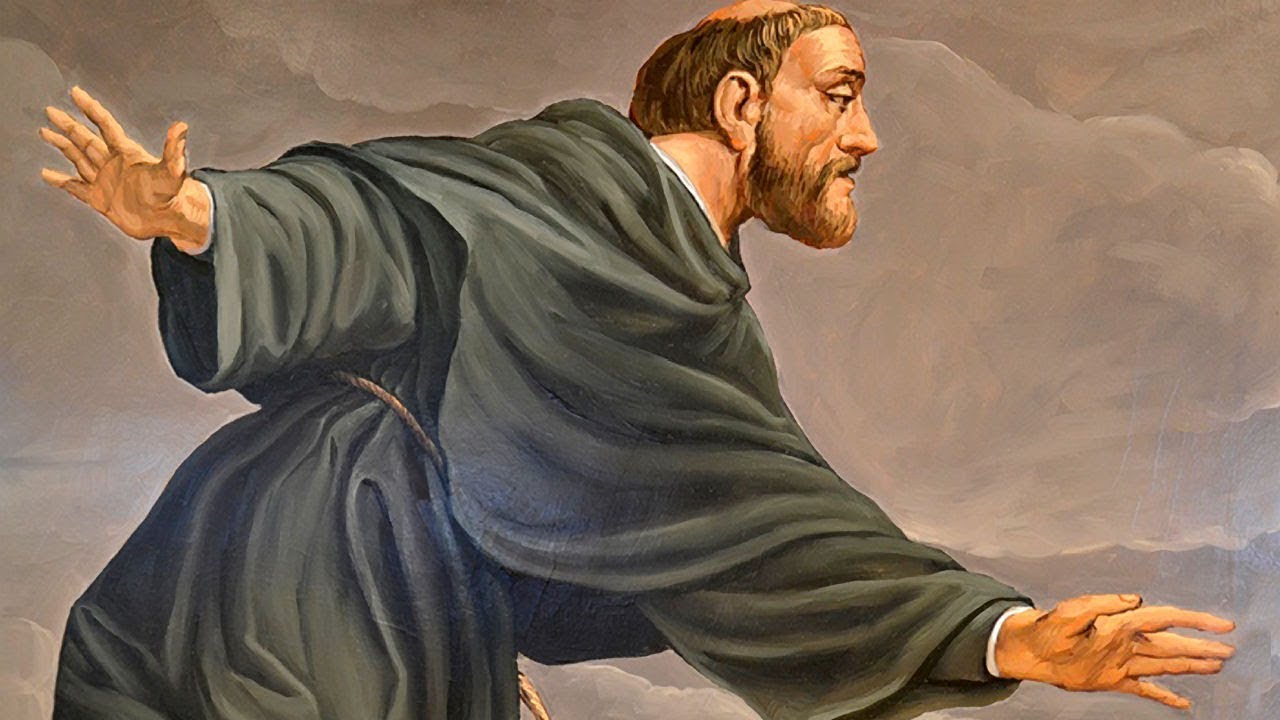
Recently I was watching a New Age to Jesus testimony.
At the time-stamp I linked, the ex-healer, ex-yoga practicioner, and ex-Halloween-enjoyer describes Hindu polytheism as the worship of different aspects of the one creator God, and how she used that frame to reconcile polytheism with a monotheistic belief in one creator God. The evangelical Christian interviewer, sincerely incredulous, replies, how fascinating— as if to believe in polytheism could not be more bizzare and misguided.
I found his reaction a bit much. Yes, religions are different. But not different enough for incredulity.
Most believers have a natural longing for divine assistance, and a mind that wants to know which divine power to call for help.
In Hinduism, we beseech the appropriate deity. In Catholicism, we pray to the appropriate patron saint. There are patron saints for camera makers, actors, and hemmorhoid-sufferers.
If a Hindu wants to excel on their test, they might pray to the goddess Saraswati, while a Catholic would pray to St. Joseph of Cupertino, the patron saint of test takers.
The longing is the same, but the solution is different.
In Hinduism, we pray to deities that are worshipped as all powerful, non-human beings. These deities and what they represent are poorly understood to most Hindus I’ve met, but are deeply known to and experienced in more serious Hindu lineages.
The saints, however, are human beings. And unlike the Hindu deities, the saints are often the meekest and humblest of us, and it is in that meekness that God exalted them. Though it resembles polytheism, praying to the saints for intercession is a different feeling, a different orientation, and a different felt experience in prayer.
I have anxiety beseeching Hindu deities because I don’t know what they really are, or what they really want. I don’t know really know what forces I’m calling in. I don’t understand why Shiva decapitated Ganapathi, or why Kali holds a string of skulls. I trust these have deep symbolic significance. But this symbolism is highly esoteric, and inaccessible to the layman, without deep study, initiation, and practice. Reading a few articles about the symbolism does not suffice.
I have no anxiety praying to the saints, however. They were humans with human issues. They dealt with the most mundane of human concerns and were surrounded by normal human beings like me. They themselves were anything but normal. St. Joseph of Cupertino could levitate. He was clearly a special person, presdestined by God to be a saint. But he also had to deal with the most ordinary trials of human life: passing and failing entrace exams, and struggling to get a job. And so he relates to the real human struggle of trying to get into a university that calls to us.
I do not at all wish to say Catholicism is better to Hinduism. Different paths work for different people, and I’m still searching for mine. There are Hindu practicioners who have had their lives utterly transformed by proper worship and relation to the deities, and there are anxiety-free laymen who gain a lot from a simple devotion to different forms.
I just want to offer my own phenomenological observation— how I personally feel praying to deities vs saints— that I feel some may relate to.
Postscript: Added Nuance For The Disgruntled Reader
Hindus can also worship and beseech human saints, like Ramana Maharishi or Ramakrishna Paramahamsa who were also immensely gentle, humble, and full of miracles. But unlike Christian saints, the Hindu saints are most often worshipped as an all-powerful God, usually with the epithet bhagavan. All gurus or teachers are equivalent to God.
Some famous Christian’s did worship deities. For example, Alain de Lille, of the mystical School of Chartres, in his poem Anticlaudianus, writes “So let your spring, O Phoebus, inspire your poet / That the arid mind may be refreshed by your streams.”1 Phoebus is Apollo, and he invokes him as muse, just as a Hindu poet might invoke Saraswati.
My anxiety around Hindu deity worship could simply mean I’m “not worthy” in some way, or have failed some divine test.
From Ephesus - Chartres - Goetheanum by Peter Selg and Constanza Kaliks, in the School of Chartres chapter— highly recommend