Disclaimer: I don't know anything. The draft was written as a reminder to myself as an antidote to periodic delusions of grandeur.
The greatest adventures lie in the imagination. The greatest struggle is with one's own vice. Worldly glory is temptation.
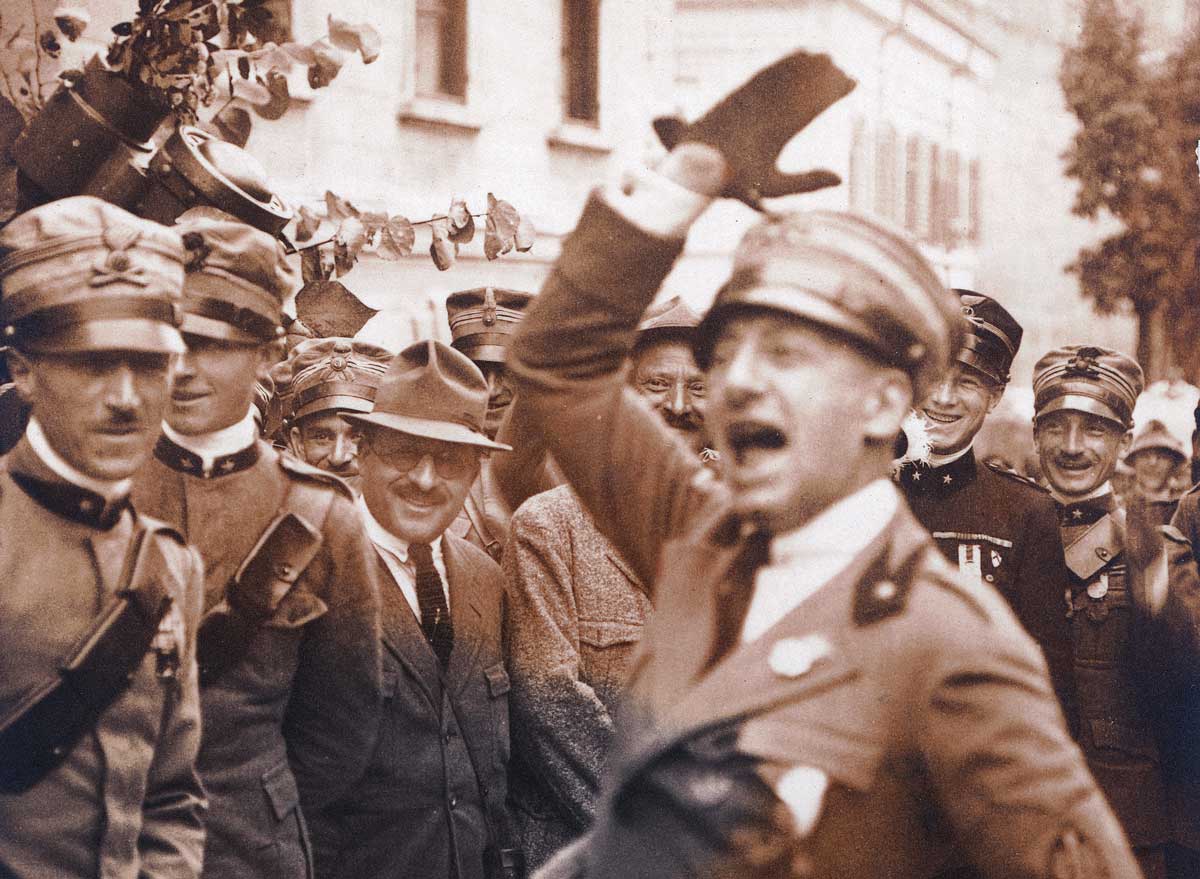
Gabriele D'Annunzio possessed immense strength and passion. He lived fully the roles of seducer and war hero. Yet in his moments of clarity, it was art and contemplation he recognized as the worthiest pursuits.
Art! Art! Here was the faithful Lover, always young, immortal; here was the Source of pure joy, forbidden to the multitude, conceded to the elect; here was the precious Food, which makes man similar to a god. How could he have drunk from other cups after bringing his lips to that one? How could he have sought other pleasures after having tasted the supreme one? How could his spirit have held other turbulences after having felt within it the unforgettable tumult of creative force? How could his hands have idled and frolicked wantonly over the bodies of women after having felt a tangible form erupt from his fingers? How, ultimately, could his senses have weakened and become perverted into base lust after having been illumined by a sensibility that discerned invisible lines in the appearance of things, perceived the imperceptible, gauged the hidden thoughts of Nature?
And:
He felt himself finally being penetrated by the truth proclaimed by the Upanishad of the Vedas: "Hae omnes creaturae in totum ego sum, et praeter me aliud ens non est." The great gust of ideality exhaled by the sacred Indian books, once studied and loved, appeared to uplift him. And repeatedly, the Sanskrit formula glowed for him in a remarkable way: "Tat Twam Asi"; which means: "This living thing, that you are."
History laughs at him for his worldly conquests, his “flamboyant Fiume escapade”. But his art is still respected, his prose is still taught in schools.
Nietzsche's Übermensch was not a conquerer, but a lone hermit who found the ultimate vitality in wandering freely through nature. He had no worldly ambitions. His struggle was to keep his freedom. Homer's Odyssey is not about the literal adventure, but the whole myth is an allegory for man's search for his own soul.1
Plato's timocratic man, the rajasic imperialist, is a degeneration of the true ideal: the gentle philosopher-king, who directs that passionate part of his soul to search for truth. To grow in depth of insight rather than breadth of possession. The philosopher-king is forced to rule out of duty-- he does not want to, for it would interfere with his quiet contemplation.
Dopamine is the stimulant of the conqueror, serotonin the bliss of the contemplative. Always remember we live in a society that favors the former at the expense of the latter. You need not do the same.2
If the world needs you, it will find you. To fight to impose yourself upon the world is to miss those of life's subtle secrets that save themselves for the gentle.
Perfect yourself by life's subtle tests rather than contriving your own gross ones. Great work calls to those who are ready. And the rewards of this patience are great. Enjoy the peace and stability that comes from handling your small obligations carefully and well. Lay in the grass, sing your songs, listen to the water for hours and hours. Study only what stirs your feeling for truth and dwell on each word in peace. Do not bind yourself preemptively out of restless ambition. Wait until nature speaks to you once more.3 Seek calm and steer from there, lest you force Spirit to work overtime to correct your mistakes:4
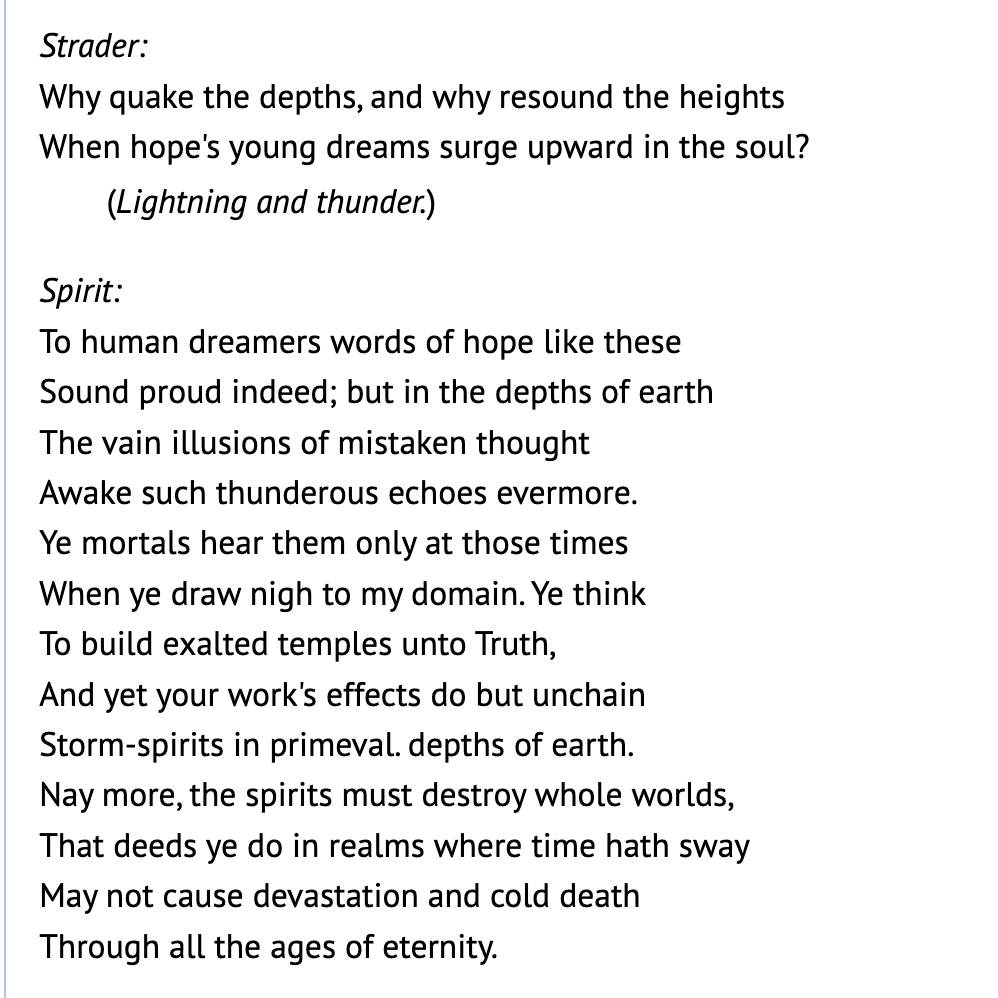
According to Rudolf Steiner, at least.
The wise and contented Wesley Y. told me his secret to great stability and happiness was "preferring serotonin to dopamine". And that most of us prefer the opposite.
It is better to say, “I am suffering,” than to say, “This landscape is ugly.” - Simone Weil
Steiner's Portal of Initiation, Scene 4